Contact Center: From Customer Research to Launch
At a glance
- The problem
- Support teams needed voice, chat and messaging in one workspace, connected to the helpdesks they already used.
- The decision
- Prioritise Zendesk and Freshdesk integrations over the original Salesforce-only plan, preserving the helpdesks customers already relied on.
- My role
- Associate Director, Design Plivo, 2021 to 2024
- Worked with
- Product manager, engineering leads, executive leadership and support leaders at customer and prospect companies.
My contribution
- Led customer and market research to identify the needs of inbound support teams.
- Secured leadership alignment on the integration strategy and scoped the first release with product and engineering.
- Designed the agent, supervisor and admin experiences around the work observed in customer teams.
Project outcomes
- Launched a contact-center product with a unified conversation timeline, live queue visibility, routing configuration and helpdesk integrations.
- The inbound support work established workflows and customer understanding that later informed Plivo’s voice AI direction.
The Challenge: The Fragmented Market
Plivo had voice APIs, messaging APIs, and phone number management, but no packaged product for teams who handle customer conversations. Support teams at mid-market B2C companies were stitching together separate tools for voice, chat, and messaging with no unified view of the customer.
I reviewed enterprise contact centers and SaaS helpdesks to understand how they handled voice, ticketing and implementation. The support teams we interviewed needed real-time communication alongside the helpdesks they already used. That combination gave us a specific starting point for a first release.
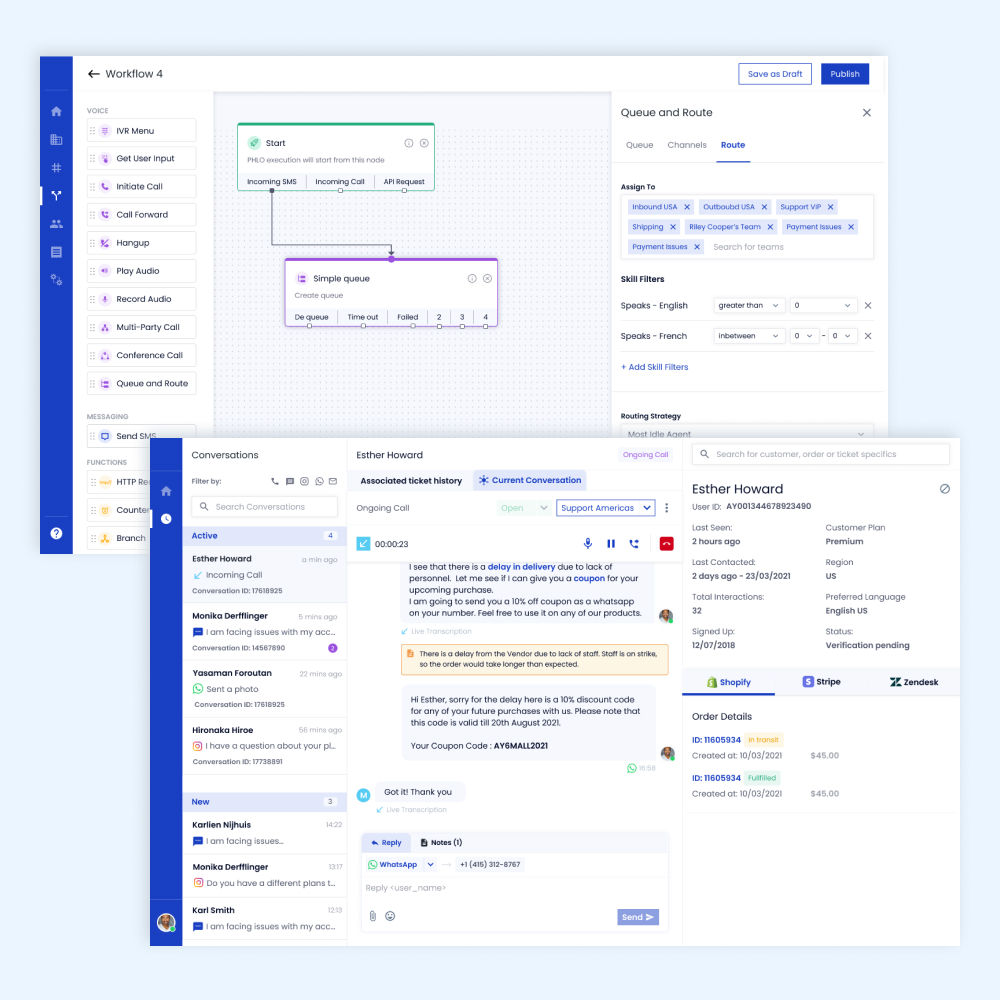 The unified agent workspace: voice, chat, and messaging in a single interface
 My Role
I led design from discovery through launch, using customer and market research to shape product direction. With the product manager and engineering leads, I scoped the first release around inbound support. I brought customer evidence to leadership and secured agreement to change the integration plan so the product would work with the helpdesks those teams already used.
Identifying the Product Gap
I analyzed 12+ platforms across the market spectrum. I compared implementation needs, voice workflows and live operational tools across contact centers and SaaS helpdesks. Our research focused on the gaps those teams encountered when combining these tools.
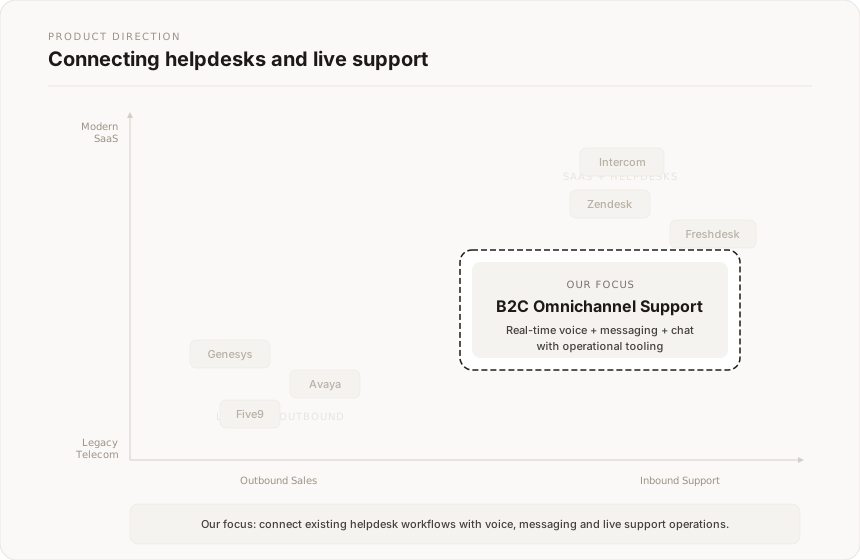 Product direction: connect helpdesk workflows with voice, messaging and live support operations.
 How Support Teams Actually Work
I interviewed support leaders at B2C companies across e-commerce (Bigbasket, Pepperfry), food delivery, health tech (HealthifyMe), and ride-hailing (Rapido). These conversations identified operational patterns that shaped our design priorities:
- Channel specialization: Agents focus on either voice or non-voice, rarely both simultaneously. Non-voice agents handle 2–10 concurrent conversations depending on complexity.
- The 7-Agent Pod: Team leaders manage 7–8 agents maximum. They need live queue visibility and the ability to barge into conversations (invisible to the customer) to coach agents in real time.
- Quality monitoring: Audits happen frequently but are entirely manual. Leaders sample conversations and score them against spreadsheets, with no integrated tooling.
- Routing as one-time setup: Routing rules are configured once and rarely changed. The ongoing work is queue management and agent availability, not rule creation.
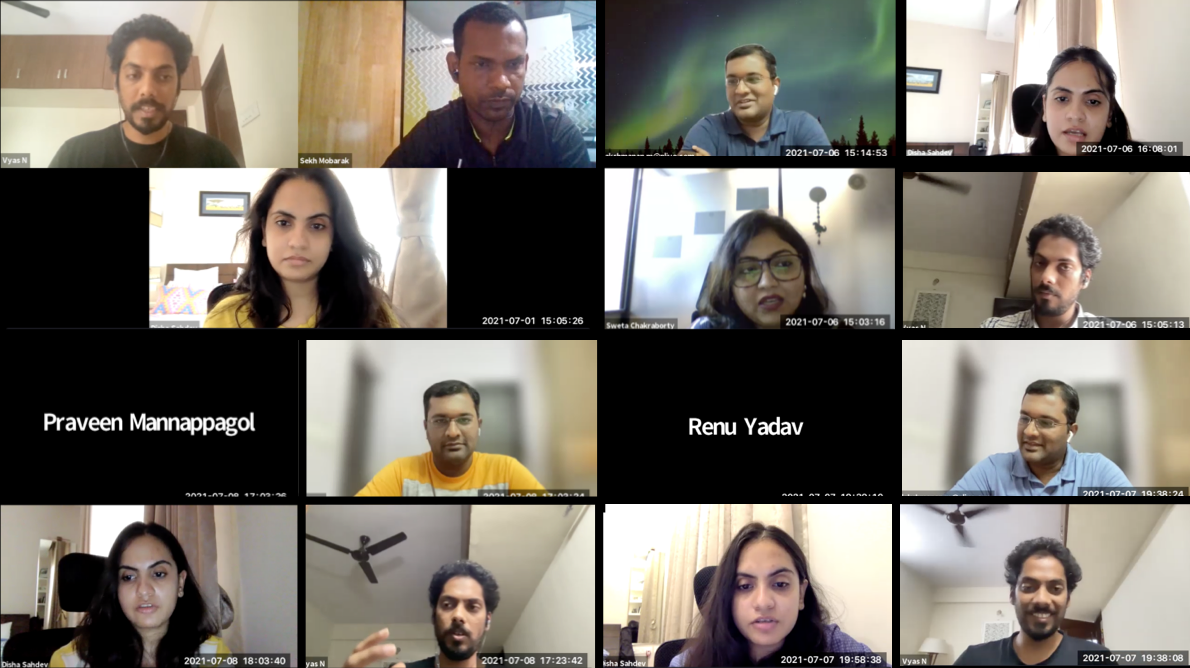 Interview participants. The findings and resulting design priorities are described above and below.
 The decision that changed the roadmap
Based on the research, I framed the product strategy around three principles that shaped our roadmap discussions:
- Omnichannel by default: Agents see a unified conversation timeline across voice, messaging, and chat. No switching between tools or losing context when a customer moves channels.
- Built for resolution, not sales: The interaction model was designed purely around inbound resolution workflows, with the agent workspace organised around resolving customer issues.
- The Integration Pivot: The initial business plan was to integrate exclusively with Salesforce. My user research showed that B2C support teams were already locked into Zendesk and Freshdesk. I recommended that we integrate with those platforms rather than compete against them, and leadership agreed to change direction. This positioned the product to sit on top of established helpdesks, so teams could keep the helpdesk workflows they already used.
Key Design Decisions
1. The Agent Workspace
I designed the workspace around the conversations support agents handle throughout their shifts, bringing the context and actions they need into one place:
- Unified conversation timeline: Voice, chat, and SMS appear in a single chronological view. An agent can see if a customer called yesterday about the same issue they are messaging about today.
- Quick actions & structured handoffs: One-click operations for common resolution patterns (transfer, hold, escalate). When a conversation transfers, the receiving agent gets full context, eliminating the need for the customer to repeat themselves.
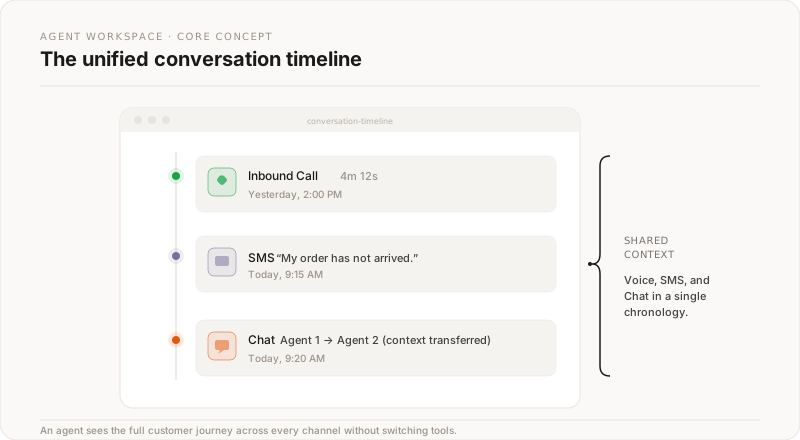 Unified conversation timeline: voice, SMS, and chat in a single chronological view
 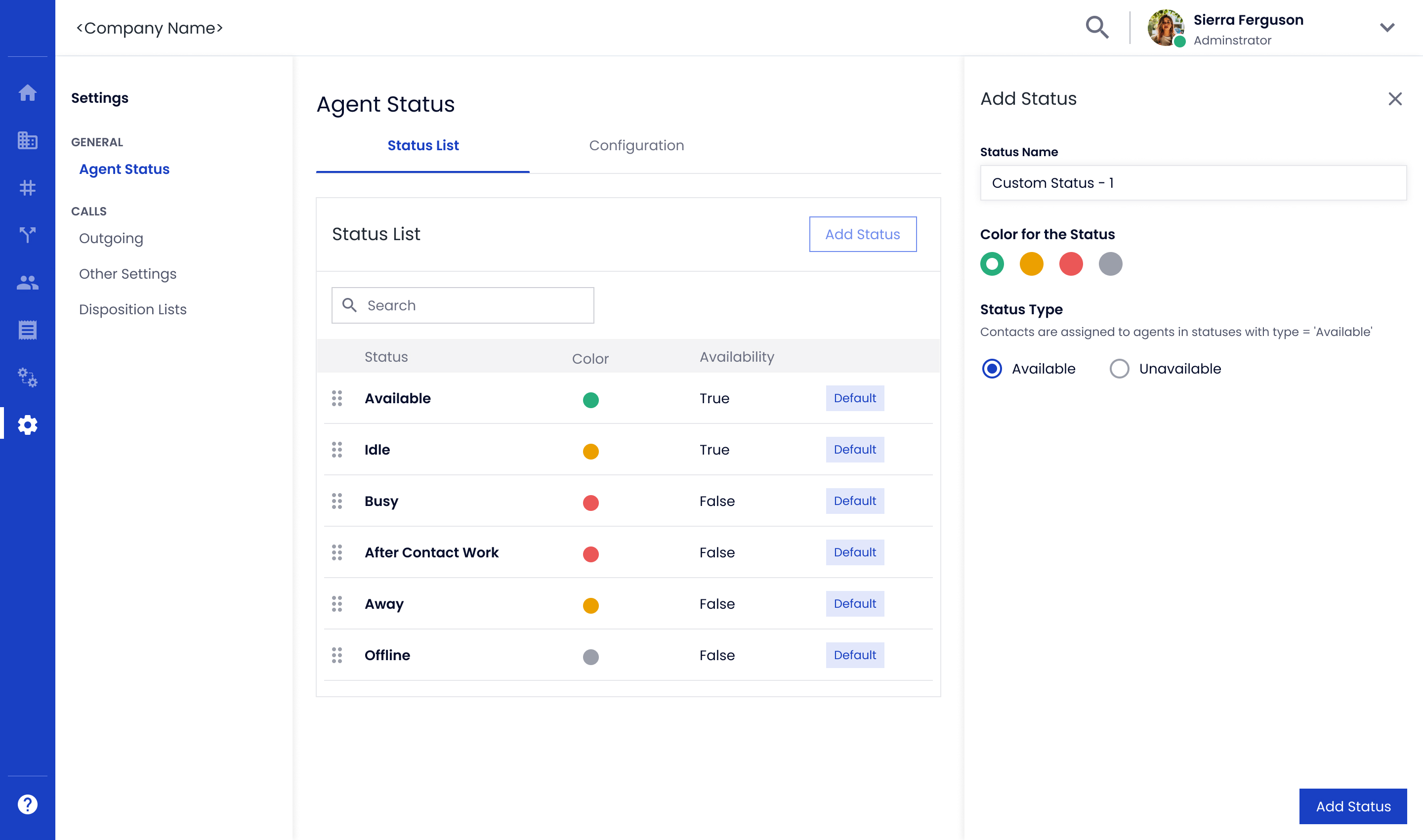 Agent workspace: status management and conversation handling
 2. The Team Leader Experience
Research showed that supervisors managing 7–8 agents need real-time operational visibility, not retroactive dashboards.
- Live queue & barge-in: Real-time view of queue depth and agent availability. Leaders can invisibly join an active conversation to coach an agent without interrupting the customer interaction.
- Quality audit integration: Scoring rubrics were built directly into the conversation review flow, replacing the manual sampling process teams were running in external spreadsheets.
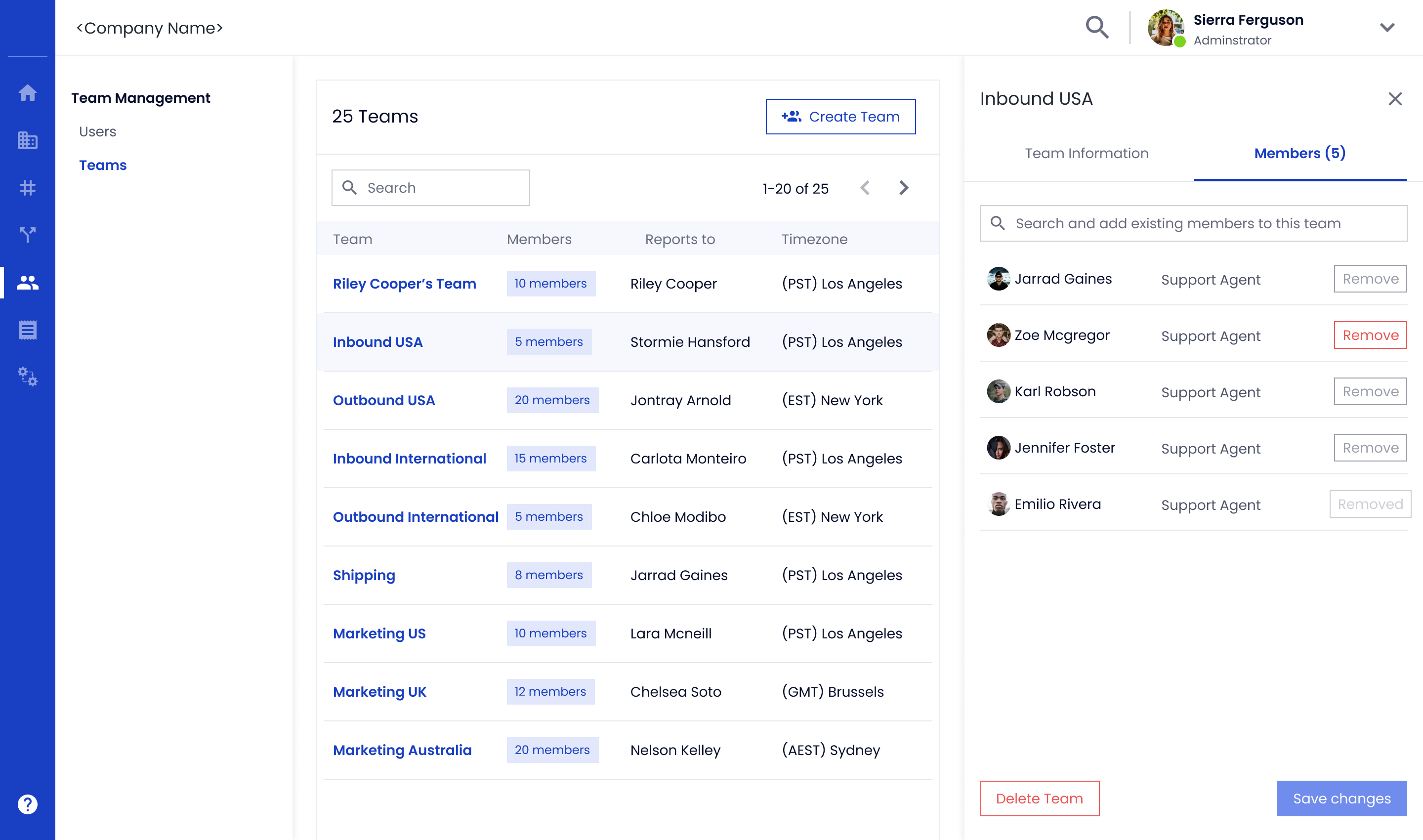 Team leader view: live queue visibility and real-time agent monitoring
 3. Admin Configuration (Self-Serve Routing)
I designed the configuration layer around the finding that routing is a one-time setup task. The interface prioritized first-time clarity over power-user efficiency.
- Visual rule builder: Self-service routing rules for directing incoming communications based on channel, customer attributes, or time of day.
- Admin setup: Business hours, region-specific holiday calendars, and phone number assignment were designed so admins could complete full setup without touching the Plivo API console.
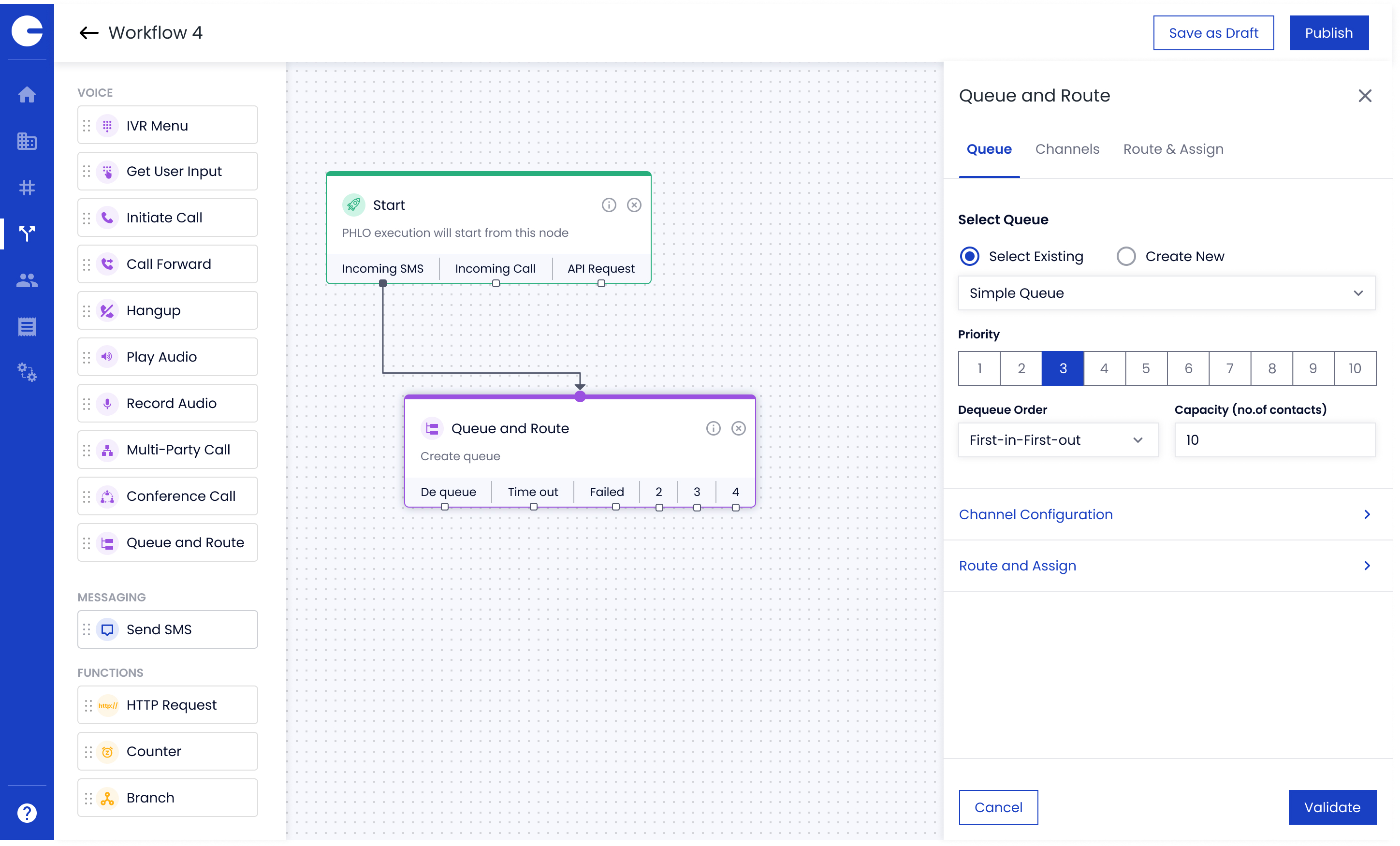 Queue management: self-serve routing configuration
 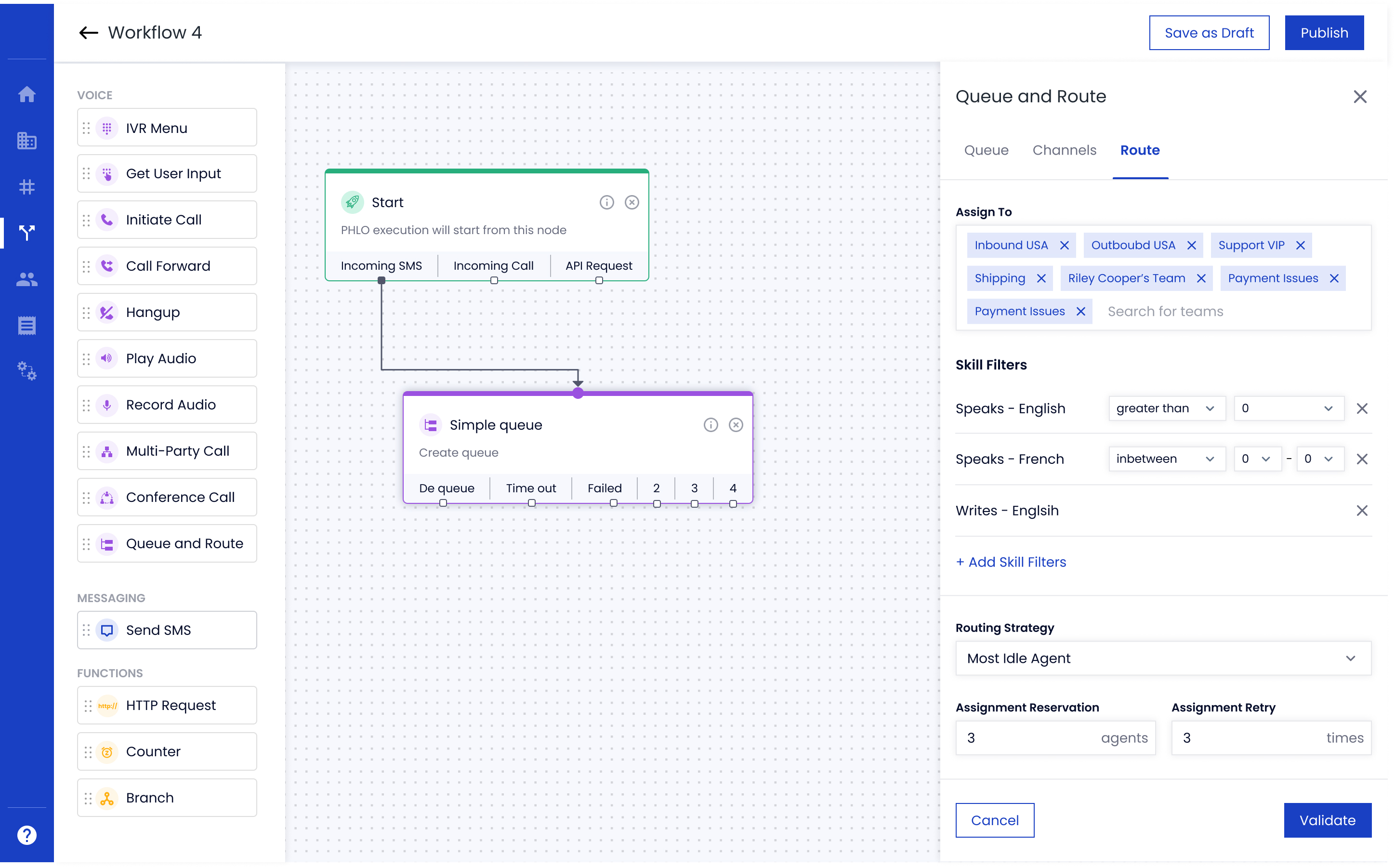 Routing rules and agent assignment
 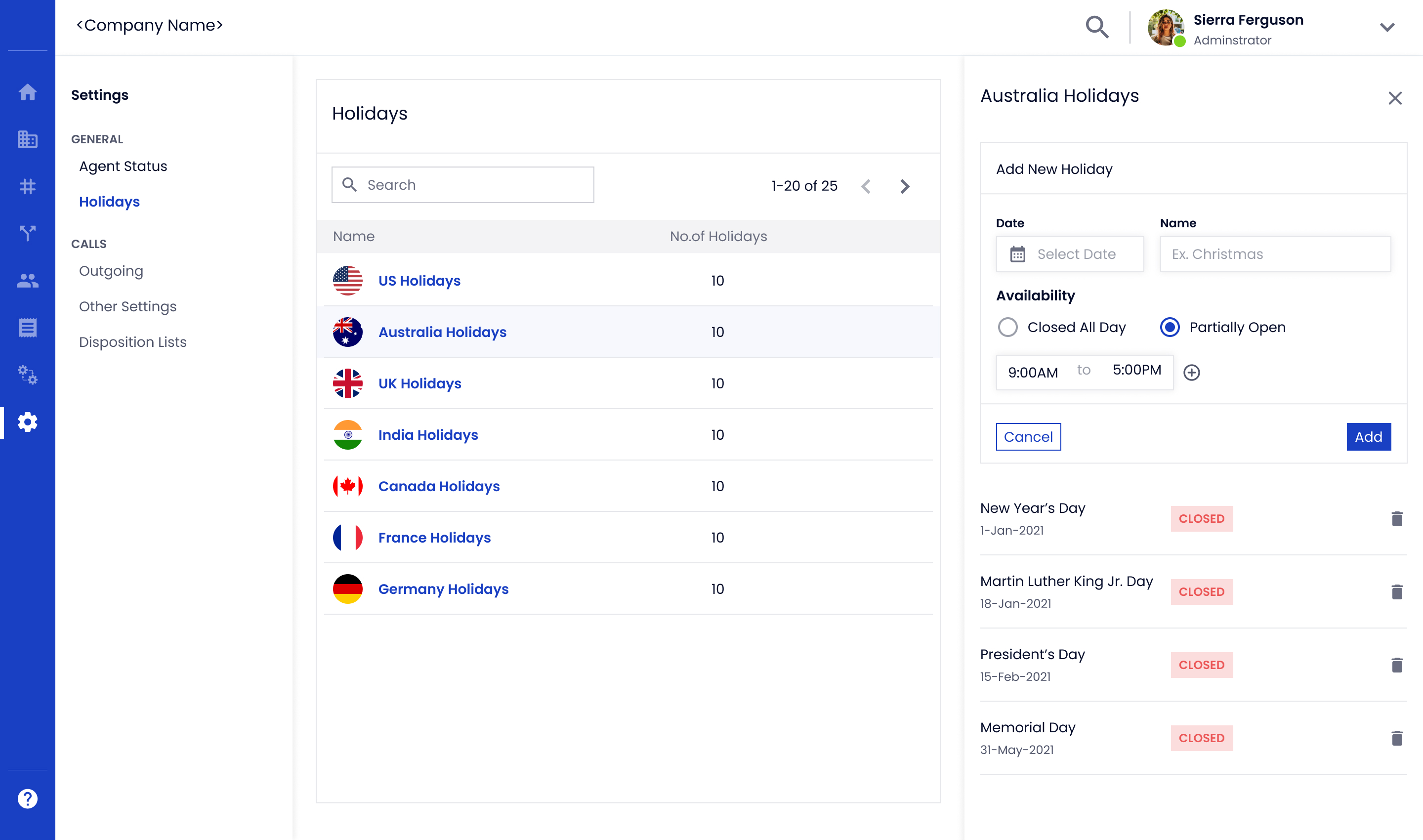 Business hours and holiday schedule configuration
 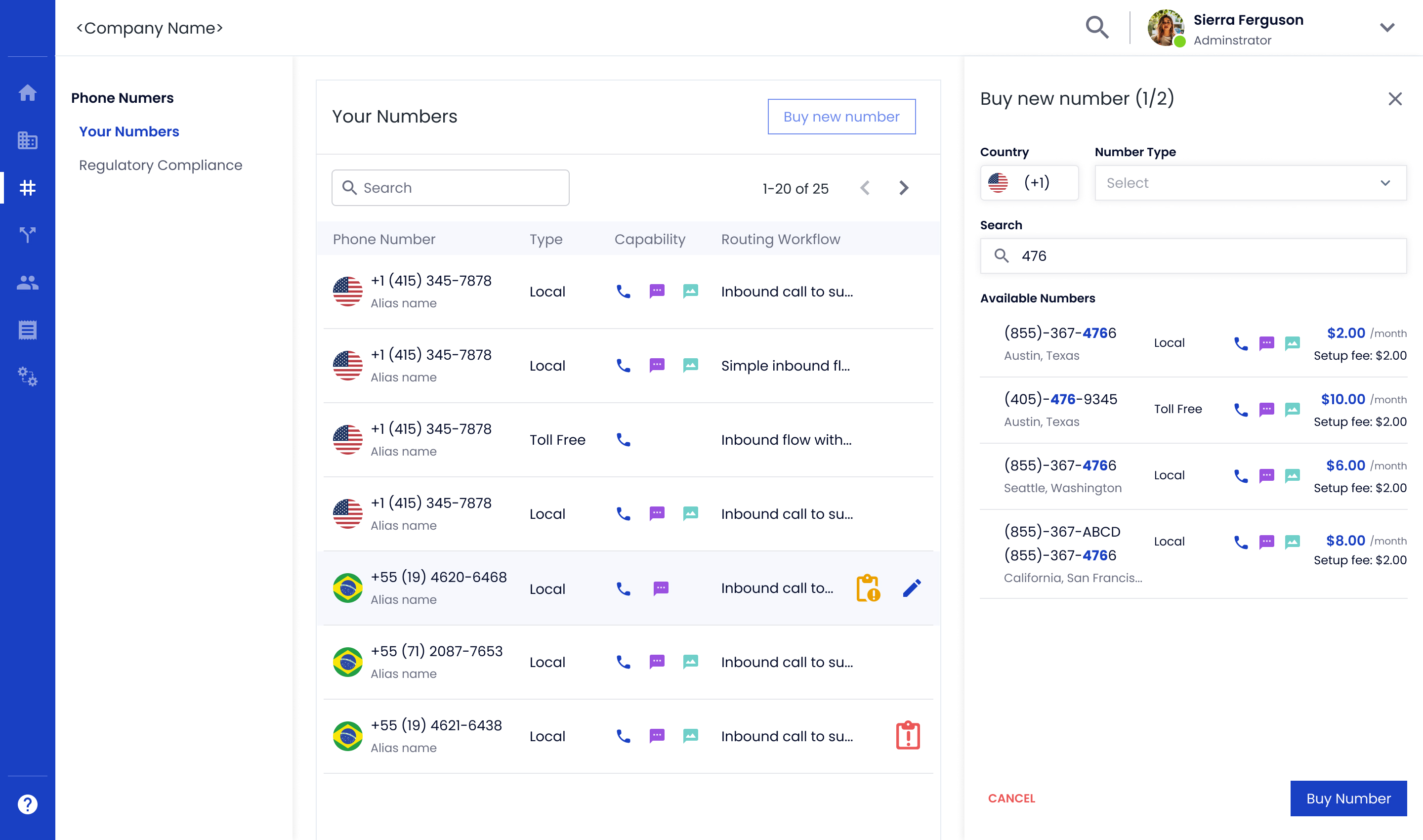 Phone number management within the contact center
 The Outcome
- Product launch: The team took the contact center from discovery through a first release, with agent, supervisor and admin workflows.
- Integration direction: Research changed the plan from Salesforce-only integration to supporting the Zendesk and Freshdesk environments used by the teams we interviewed.
- Unified omnichannel experience: Voice, messaging and chat collapsed into a single, specialised agent workspace.
Where the work led. The first release focused on support, with sales workflows scoped separately. Its inbound workflows later became a foundation for Plivo’s voice AI platform, as parts of the experience moved from human agents to AI agents.
Reflection: Letting Research Change the Plan
Research changed our integration priorities and helped us narrow the first release to support workflows. The separation of roles and channel-independent architecture also gave the team a foundation it could adapt when the product moved toward voice AI.