Building Plivo’s Voice AI Brand Function
At a glance
- The problem
- The brand team needed to support Plivo’s voice AI positioning, content, partnerships and research while manual production competed with strategic work.
- The decision
- Keep positioning and creative judgment with people while using agents for repeatable work and specialist partners for production the team could not support internally.
- My role
- Director, Design & Brand Strategy Plivo
- Worked with
- Three-person brand team, company leadership, sales and account teams, and a video production agency.
My contribution
- Led voice AI brand strategy and built a three-person team supported by four agents for research, positioning, content and partnerships.
- Built the partnership programme and owned India events across messaging, experience, evaluation and budget.
- Defined agent briefs and review boundaries, and helped team members build and direct their own AI workflows.
Project outcomes
- Secured 11 live partnerships in four months, offering product credits and contributing to a 30% increase in the sign-up pipeline.
- Built Plivo’s India Voice AI presence from zero in under four months. Curated paid-entry events generated approximately $250K in potential annual contract value within a single quarter.
Building a voice AI presence with a small team
Plivo’s move from communications APIs into voice AI needed a clearer product narrative and new ways to reach customers and partners. A three-person brand team had to support positioning, content, research, partnerships and events. Manual production was taking time away from decisions about where to focus.
I built the team’s operating model around that constraint: people own positioning and creative judgment, four AI agents support repeatable research and production, and a specialist agency handles video. The goal was to give a small team the capacity to establish new programmes while keeping responsibility for the work clear.
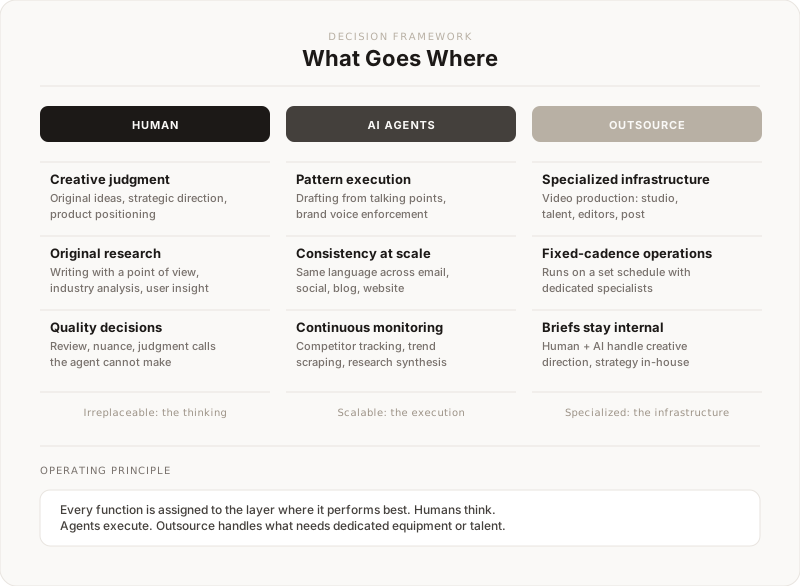 Decision framework: what stays human, what scales through AI, what gets outsourced
 My role and the choices behind the team
As Director, Design & Brand Strategy, I lead Plivo’s voice AI positioning, built the partnership programme and own the India events charter across messaging, experience, evaluation and budget. Alongside this, I continue to shape voice AI feature priorities through market insights and critique of final product designs.
I kept creative direction, positioning decisions and interpretation of research with people. Agents handle tasks with a defined brief: monitoring competitors, gathering sources and drafting from approved talking points. Specialist video production stays with an agency because the small team does not need to carry that production infrastructure itself.
Human review is required before publishing so the team can check sources, assess the output and decide what to use. When an agent misses something, those corrections become part of the brief for subsequent work.
Early work with the Positioning Agent showed how much the quality of its research depended on the brief. A broad request to “analyse the competitive landscape” produced a useful overview but missed competitors, overlooked different perspectives and offered little insight into changes in messaging or positioning opportunities.
I made the brief more specific by defining which adjacent markets, competitors and sources the agent should examine, along with a request to flag contradictions and challenge weak positioning. Reviewing the output still requires someone who knows the industry well enough to notice what is missing.
I use the brief to make the team’s expertise explicit: which sources to consult, what to question and which decisions need a person.
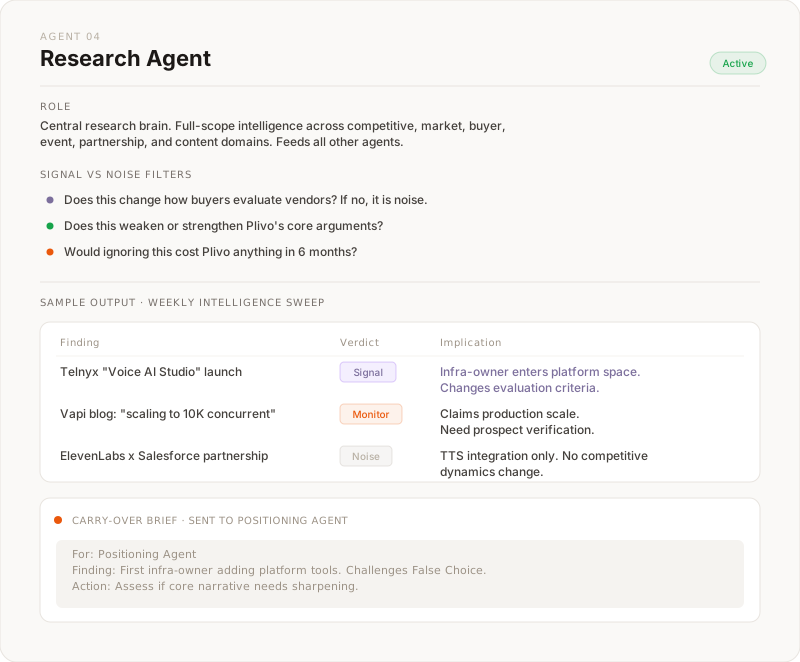
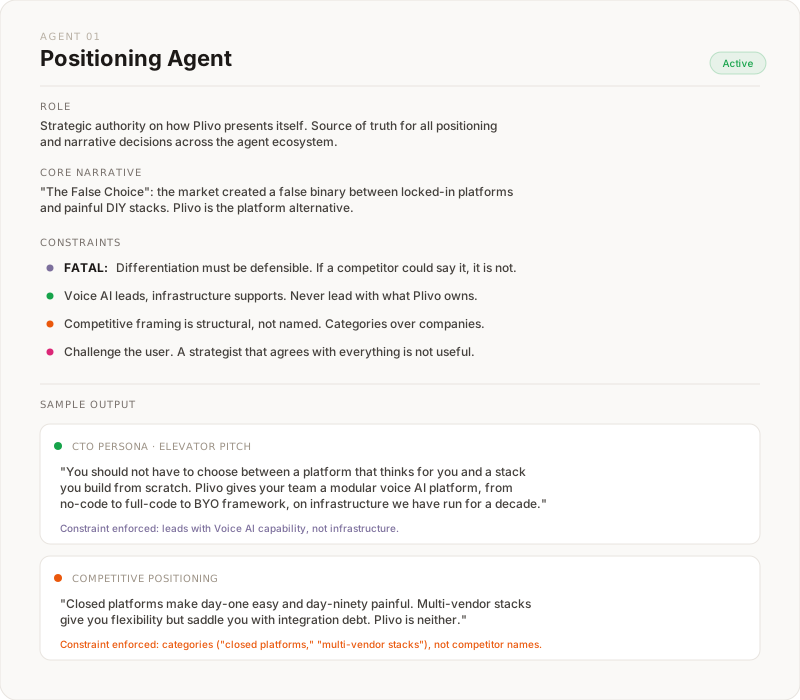 Positioning Agent: role definition, constraints, knowledge base, and structured output
 Connecting research, positioning and production
I connected the agents so research findings could inform positioning and approved positioning could guide content drafts. People still review the sources and make the publishing decisions.
- Research Agent: Runs continuous competitive analysis and market monitoring instead of periodic sprints. Its output feeds directly into the Positioning Agent via an automated carry-over brief, replacing the manual process where a human would research, synthesize, and then brief a strategist. Maintains a living competitive picture that updates as the market moves.
- Positioning Agent: Ingests research findings, monitors competitor messaging across ecosystems, surfaces trending topics, and drafts positioning options for human review. Designed to flag contradictions and push back on weak framing, not just generate options.
- Content Agent: Converts approved positioning and talking points into full drafts across formats (email, social, blog, website copy) in a consistent brand voice. Voice is trained iteratively: starting with a guidelines document, then refining through real examples across mediums until the gap between agent output and human-written content narrows significantly.
- Partnerships Agent: Researches potential partners, evaluates fit against Plivo’s criteria, surfaces contacts, and drafts outreach. Event Evaluation is a trained skill within this agent: it scores every event opportunity against defined parameters and recommends whether to attend, participate, or skip before a human makes the final call.
I own most of the agents directly, while team members improve their role-based agents through feedback and revised briefs that carry corrections into subsequent work.
Agent specifications and sample outputs illustrate the briefing and review model. Sample event scores, budgets and research findings are not programme results.
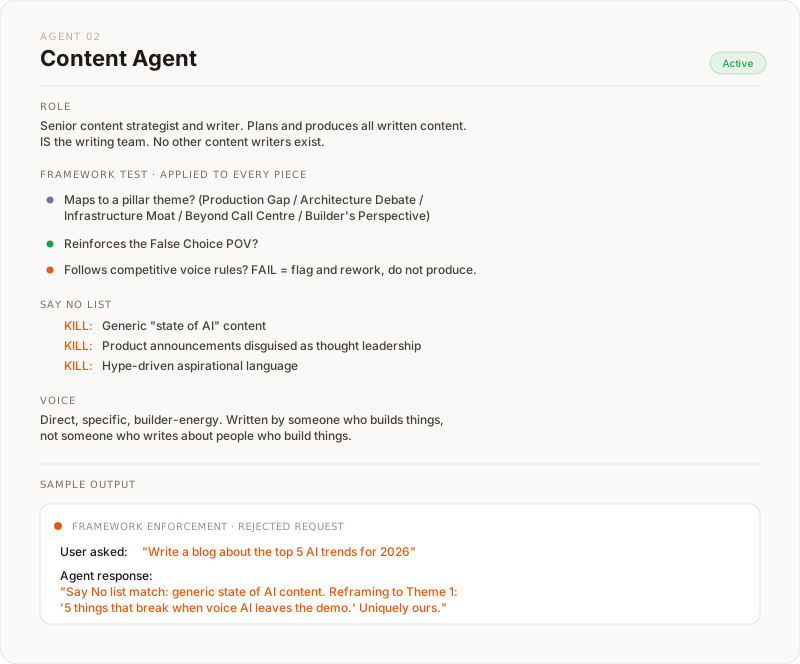
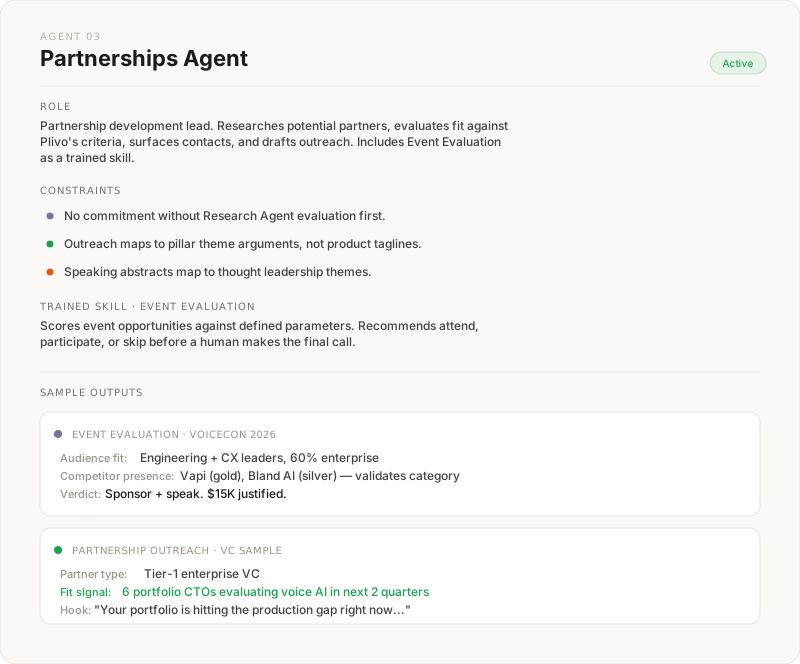
The operating model connects three people, four agents and a human review loop. Each agent has a defined area of work and a brief that the team can refine.
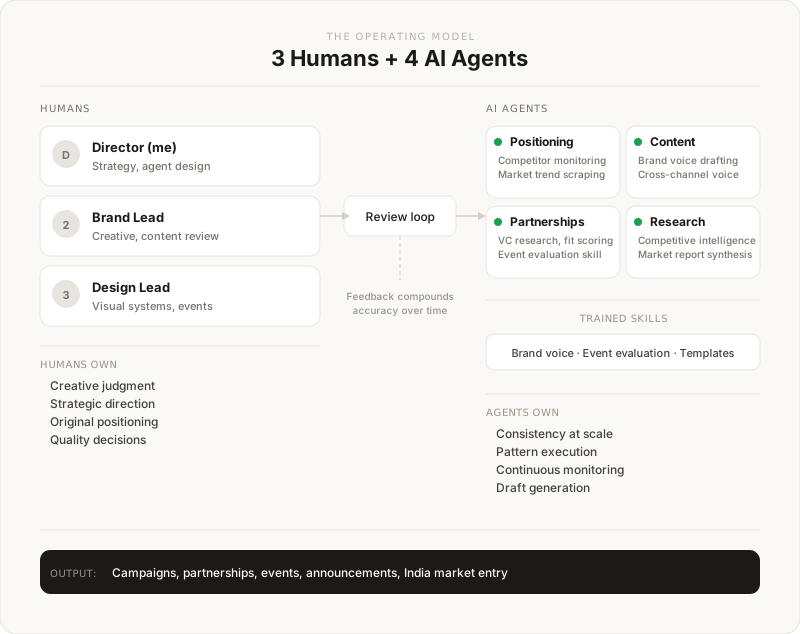 Operating model: three humans setting direction, four AI agents executing in parallel
 Giving the team ownership of the change
Early failures helped us improve agent briefs, but introducing pre-built agents also created resistance because people felt replaced before they understood how the tools would support their work.
To build ownership, I asked each person to create something useful with AI before adopting the shared agents. One team member built a dashboard for generating event materials from approved templates, while another prepared creative variants for A/B testing, giving both a practical way to direct the tools and assess their value.
What the programmes delivered
The operating model supported two new programmes: partnerships and India events. I owned the programme decisions and worked with the team, sales and account managers on execution and follow-up.
- Partnerships: Secured 11 live partnerships in four months, offering product credits and contributing to a 30% increase in the sign-up pipeline.
- India events: Curated paid-entry events generated approximately $250K in potential annual contract value within a single quarter. Plivo’s India Voice AI presence grew from zero in under four months, with ownership across branding, messaging, event experience, evaluation and budget.
Event choices centred on audience fit and the right spokesperson, with sales follow-up helping us assess the opportunities each event created. The $250K represents potential annual contract value from identified opportunities, rather than booked revenue.
Since January 2026, the team has supported monthly events with human-reviewed collateral, speaker posts and panel announcements. The broader India work includes speaking invitations, closed-door dinners and a partnership with EkStep Foundation on voice AI accessibility across Indian languages.
How the team’s work changed
- The designer who previously focused on production now leads visual strategy and prototypes concepts independently.
- The brand lead moved beyond managing content calendars to driving positioning research and shaping competitive narratives.
- Continuous research and first drafts from agents give the team a starting point for review, while people retain responsibility for accuracy, creative direction and publishing.
Reflection
The hardest work was defining responsibilities: deciding which tasks agents could support, what people needed to review, and how each team member could take on broader strategic work.
Running this team gives me direct experience of designing agent briefs, review boundaries and handoffs. I bring that experience to product design questions about how people direct, evaluate and trust agent output.